
The magnetic materials aisle: non-oriented 50WW470, 50WW600 and 35WW300 for rotating machines, grain-oriented B30AV1500 for transformer cores, and DT4C electrical pure iron — 89 grades, slit and sized for lamination lines in Shanghai.
Every other product in the catalogue is bought for strength or formability. Electrical steel is bought for one number: iron loss.
The property that names the grade. In non-oriented steel, the designation encodes thickness and maximum specific total loss: 50WW470 is 0.50 mm strip with iron loss ≤ 4.70 W/kg measured at 1.5 T, 50 Hz (P15/50); 50WW600 and 50WW800 are the cost tier at 6.00 and 8.00 W/kg. The Baosteel B-series uses the same code — B50A470 is the same material as 50WW470. Grain-oriented grades are coded against 1.7 T: B30AV1500 is 0.30 mm with P17/50 ≤ 1.50 W/kg, which is why transformer cores run GO and motor stacks run NO.
What we stock. 89 grades split across non-oriented (50WW270 through 50WW1000, 35WW300, and B35A/B50A/B65A in over forty loss classes), grain-oriented (B30AV1500, B27AV1300, plus the high-permeability B-AHV and domain-refined B-APV series), and DT4C electrical pure iron. The price band is CNY 3,680–5,680 per tonne across the 310-SKU range — the spread between 0.50 mm commodity NO and the tight-tolerance GO and pure-iron tiers. All supplied as coil with the insulation coating class and iron-loss class confirmed on the Mill Test Certificate; slitting and cut-to-size are done in-house, because a lamination line has no use for a raw parent coil.
NO steel is near-isotropic: same loss in every in-plane direction, ideal for rotating flux in motor stators and rotors. GO steel has its magnetic easy axis locked to the rolling direction — spectacular one-way performance, poor off-axis. Put NO in anything that spins; put GO in cores where flux flows straight.
Motors and generators → NO. Transformers → GO. No third option.All three are 0.50 mm NO, but the loss class changes the price and the efficiency. 50WW800 is the commodity tier for appliance motors; 50WW600 the industrial default; 50WW470 (and 35WW300) the premium-efficiency and EV tier. The efficiency gain must justify the per-tonne premium — a real motor shop calculation, not a marketing one.
Pick the loss class the efficiency target demands — no tighter, no looser.Silicon steel is made for alternating flux in thin laminations. DT4C pure iron (GB/T 6983) is for DC magnetic circuits that cannot be laminated — relays, solenoids, yokes, magnetic shields — where high saturation and low coercivity matter more than loss. Different part, different material, same supplier.
Alternating flux → silicon steel laminations. DC circuit → DT4C.Loss classes and thickness indicative; confirm against GB/T 2521, IEC 60404-8-x or your motor/transformer spec.
| Grade | Type | Thickness | Typical application | Delivery |
|---|---|---|---|---|
| 50WW470 | Non-oriented | 0.50 mm | EV traction motor stators / rotors | Coil, slit to width |
| 50WW600 | Non-oriented | 0.50 mm | Industrial induction motors | Coil, slit to width |
| 50WW800 | Non-oriented | 0.50 mm | Appliance motors, cost tier | Coil, slit to width |
| 35WW300 | Non-oriented | 0.35 mm | High-efficiency / servo motors | Coil, slit to width |
| B35A230 | Non-oriented (Baosteel) | 0.35 mm | Premium motor laminations | Coil |
| B30AV1500 | Grain-oriented | 0.30 mm | Distribution transformer cores | Coil, slit for cores |
| B27AV1300 | Grain-oriented | 0.27 mm | High-efficiency transformer cores | Coil |
| B30APV1500 | Grain-oriented, domain-refined | 0.30 mm | Low-noise / low-loss transformers | Coil |
| DT4C | Electrical pure iron | 0.5–4.0 mm | Relays, solenoids, magnetic shields | Sheet / strip |
Loss class, insulation coating and gauge confirmed per coil on the Mill Test Certificate.
Typical / indicative values — the delivered coil's loss class is confirmed on the MTC.
| Grade | Thickness | Iron loss (typ.) | Test point | Magnetic polarization (typ.) |
|---|---|---|---|---|
| 50WW470 | 0.50 mm | ≤ 4.70 W/kg | P15/50 | B50 ≥ 1.70 T |
| 50WW600 | 0.50 mm | ≤ 6.00 W/kg | P15/50 | B50 ≥ 1.70 T |
| 50WW800 | 0.50 mm | ≤ 8.00 W/kg | P15/50 | B50 ≥ 1.71 T |
| 35WW300 | 0.35 mm | ≤ 3.00 W/kg | P15/50 | B50 ≥ 1.70 T |
| B30AV1500 | 0.30 mm | ≤ 1.50 W/kg | P17/50 | High B800 class (typ.) |
| B27AV1300 | 0.27 mm | ≤ 1.30 W/kg | P17/50 | High B800 class (typ.) |
| DT4C | 0.5–4.0 mm | — | — | High saturation, low coercivity |
B50 = magnetic polarization at 5000 A/m. GO loss measured at 1.7 T / 50 Hz. All values indicative; the loss class on your MTC is the binding number.
The test: laser-cut or punched laminations at 0.35/0.50 mm that must hit an efficiency target at 8–12 kHz switching frequencies; burr must stay small so the stack does not short. Our answer: 50WW470 / 35WW300, slit to feeder width with burr height documented per coil.
The test: a stacked or wound core built from 0.27–0.30 mm GO strip where flux flows strictly along the rolling direction and every watt of loss is a utility-billed penalty. Our answer: B30AV1500 / B27AV1300, supplied slit for mitered 45° core joints.
The test: a cost-competitive motor frame at 6.00 W/kg loss class, punched in high volumes. Our answer: 50WW600, coil slit to lamination width, flatness held so the punch die feeds cleanly at speed.
The test: a DC flux path that cannot be laminated — the part must saturate late and release cleanly. Our answer: DT4C electrical pure iron sheet, machined by the customer, with chemistry and magnetic-grade confirmation on the MTC.
The test: sealed-hermetic compressor stators where iron loss drives the compressor's energy rating. Our answer: 50WW350 / 50WW470, with the insulation coating class verified for the high-temperature motor environment.
Electrical steel is bought by the watt, so the processing has to protect the magnetic properties, not just the dimensions.
Slit to your punch feeder width with strict edge burr control — burrs cause inter-lamination shorts that raise iron loss by more than the grade difference.
Sheets sized for hand-stacked cores, transformer strips or prototype laminations; squareness and edge condition checked per bundle.
Coating class and continuity checked so the stack inter-lamination resistance stays within spec — the coating is a functional layer, not packaging.
Coil shape controlled and interleaved packing arranged so thin gauge arrives flat at the punch. Grade selection logic is in the electrical steel grade guide.
Grade names differ by producer and standard; the loss class is the comparability anchor. Confirm on MTC before substitution.
| GB / Baosteel grade | IEC / EN family | JIS family | Notes |
|---|---|---|---|
| 50WW470 / B50A470 | M470-50A | 50A470-type | 0.50 mm NO, 4.70 W/kg |
| 50WW600 / B50A600 | M600-50A | 50A600-type | 0.50 mm NO, 6.00 W/kg |
| 50WW800 / B50A800 | M800-50A | 50A800-type | 0.50 mm NO, 8.00 W/kg |
| 35WW300 / B35A300 | M300-35A | 35A300-type | 0.35 mm NO, 3.00 W/kg |
| B30AV1500 | M130-30S class (GO) | 30P120-class (approx.) | 0.30 mm GO — confirm loss class |
| B27AV1300 | M105-27S class (GO) | 27P110-class (approx.) | 0.27 mm GO — confirm loss class |
| DT4C | — (pure iron) | SUY-type (approx.) | GB/T 6983 electrical pure iron |
Cross-standard equivalences indicative; the delivered loss class on the MTC is the binding specification.
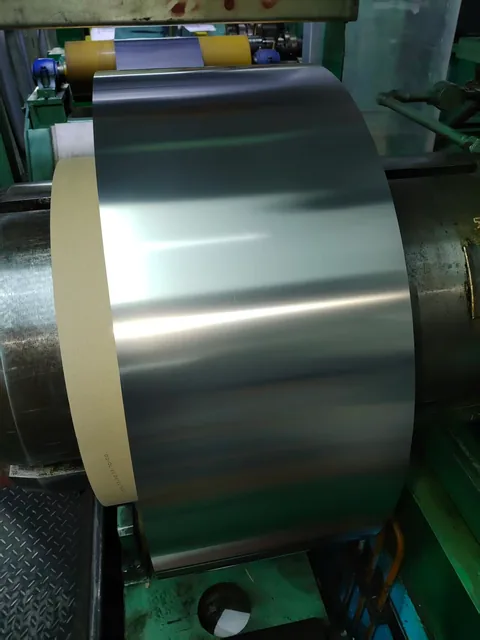
Magnet wire anchors, fasteners and shafting in the same motor assembly — 10B21, ML40Cr, 42CrMo.
Browse wire rod steel →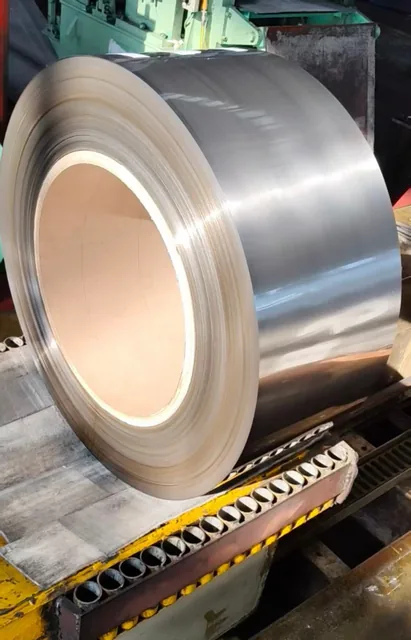
Motor housings and enclosures need corrosion protection the laminations never see.
Browse coated steel sheet →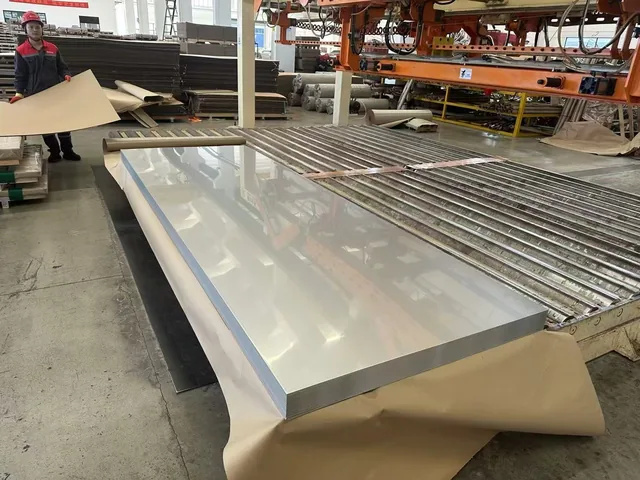
Motor frames and brackets from the general cold rolled range — strength and forming, no magnetics.
Browse cold rolled strip →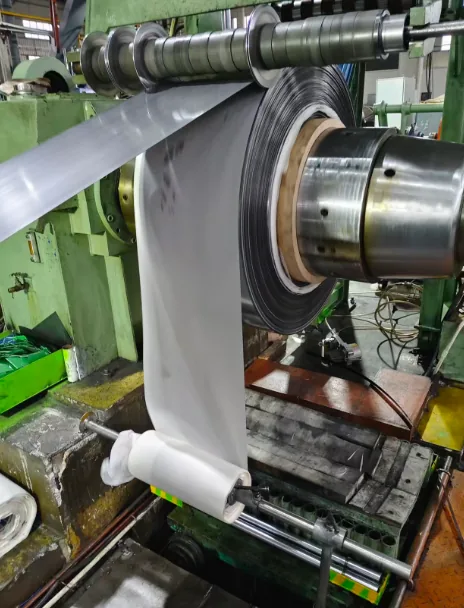
Commutator springs and contact springs around the magnetic circuit, from the spring family.
Browse spring grades →These grade families share material, processing or application territory with the topic on this page.
Invar / Kovar / Elinvar / Nichrome precision alloys for electromagnetic, thermal-bimetal and resistance applications.
Send grade or application, gauge, slit width, tonnage and destination port. Our engineers reply within one working day — processing services and application guidance included.