
The widest single door into precision strip: 61 grades from deep-drawing DC06 to hardenable SAE1050, cold rolled, annealed, slit and leveled under one roof in Shanghai — from 0.03 mm foil gauge to 350 mm plate.
The cold rolled family is the catalogue's backbone: it feeds stamping shops, blanking lines and heat treaters at the same time.
Low carbon (SPCC / SPCE / DC01–DC06 / SAE1010–1050). These are the formability grades. SPCC and DC01 handle general stamping and bending; DC04 and SPCE move into deep drawn housings; DC06 is the extra-deep grade for the most severe stretching. The DC01-C390 / C490 / C590 sub-grades we stock carry a guaranteed tensile class, so a supplier can buy "DC01 that will meet 490 MPa after forming" without gambling on the heat.
Medium carbon (S45C–S55C, C45E–C75E). Rolled to strip and supplied spheroidized, these grades are the feed for hardened mechanical parts — seat recliner segments, latch plates, transmission components. They are the crossover into our fine blanking steel strip range, and the same coils feed our in-house spheroidizing furnaces before dispatch.
High carbon and tool types (SAE1078, SK5, 65Mn, 100Cr6, GCr15). The hardenable tier: springs, saw blade bodies, clutch discs and hardened precision blanks. Thickness tolerance matters here more than formability — see the SAE1078 high carbon strip page for that family in detail.
The numbers that separate this page from a generic "cold rolled" listing: 61 grades in stock at source, a 0.03–350 mm thickness window that spans foil to plate, a 1250 mm slitting parent, and a realised price band of CNY 3,160–8,980 per tonne across the 265-SKU range — the spread between deep-drawing low carbon and bearing-grade tool strip, not a marketing bracket.
Most specification mistakes on this family are made at the boundary, not in the middle. Here is how we draw the lines.
Cold rolling buys gauge tolerance (EN 10131 class bands), a smoother surface and higher yield for the same chemistry. Hot rolled costs less per tonne and forgives thicker gauges. If your part is visible, precision-formed or fatigue-loaded, cold rolled earns the premium.
Choose cold rolled when tolerance and surface decide the part — otherwise hot rolled is the cheaper section.General cold rolled strip is annealed for formability; fine blanking strip is spheroidized for a clean shear face under a precision blanking die. If you blank net-shape edges and then harden, you want the spheroidized structure — the fine blanking family is a condition, not just a grade.
Choose spheroidized fine blanking strip when the shear face is a functional surface.Cold rolled strip ships bare and oiled — right for parts that are painted, plated or used indoors. If the formed part lives outdoors, in a roof or a humid cabinet, jump to the galvanized and coated steel sheet family and let the coating carry the corrosion duty.
Choose coated when the part's environment, not its forming, is the risk.Typical thickness windows for strip supply; equivalents approximate until confirmed against your governing standard.
| Grade | Standard | Typical thickness | Typical application | Delivery condition |
|---|---|---|---|---|
| SPCC | JIS G3141 | 0.3–3.2 mm | Appliance shells, brackets, general stampings | Cold rolled, skin-passed, oiled |
| SPCE | JIS G3141 | 0.4–2.5 mm | Deep drawn housings, pans, covers | Cold rolled, annealed, skin-passed |
| DC01 | EN 10130 | 0.3–3.0 mm | General forming and bending | Cold rolled, annealed |
| DC04 | EN 10130 | 0.5–2.5 mm | Deep drawing, multi-stage forming | Cold rolled, annealed, skin-passed |
| DC06 | EN 10130 | 0.5–2.0 mm | Extra-deep drawing, complex stretching | Cold rolled, annealed, skin-passed |
| SAE1010 | ASTM A1008 | 0.4–3.5 mm | Formed and welded structural parts | Cold rolled, annealed |
| S45C / S50C | JIS G4051 | 1.0–6.0 mm | Hardened mechanical components | Cold rolled, spheroidized annealed |
| C75S | EN 10132-2 | 0.5–3.0 mm | Hardened precision strip components | Cold rolled, spheroidized |
| SAE1078 | ASTM A684 | 0.3–4.0 mm | Springs, saw blades, clutch plates | Spheroidized or hardened & tempered |
Chemistry, gauge and mechanicals confirmed per coil on the Mill Test Certificate. Equivalents shown are indicative, not certifications.
Typical / indicative values per the cited standards — the delivered heat is confirmed on the MTC.
| Element | DC01 (EN 10130) | DC04 (EN 10130) | DC06 (EN 10130) | SPCC (JIS G3141) | SAE1010 (A1008) |
|---|---|---|---|---|---|
| Carbon (C) % | ≤ 0.12 | ≤ 0.08 | ≤ 0.02 | ≤ 0.12 | 0.08 – 0.13 |
| Manganese (Mn) % | ≤ 0.60 | ≤ 0.40 | ≤ 0.25 | ≤ 0.50 | 0.30 – 0.60 |
| Phosphorus (P) % | ≤ 0.045 | ≤ 0.030 | ≤ 0.020 | ≤ 0.040 | ≤ 0.040 |
| Sulfur (S) % | ≤ 0.045 | ≤ 0.030 | ≤ 0.020 | ≤ 0.040 | ≤ 0.050 |
Indicative reference values only. Final chemistry is confirmed on the Mill Test Certificate of the delivered coil.
These are the components where the difference between "cold rolled" and "the right cold rolled grade" shows up in scrap rate.
The test: 0.6–1.2 mm SPCC/DC01 must hold a Class-B surface through bending and spot welding with no stretcher strain. Our answer: skin-passed strip with controlled yield point, slit to the press feeder width.
The test: DC04/DC06 drawn in two or three stages without necking — the draw ratio depends on r-value and n-value, not on the certificate's tensile number. Our answer: annealed, skin-passed strip with the r/n class documented at RFQ.
The test: S45C–S50C blanked, then hardened — the blank must shear cleanly and the part must hit its hardness band without distortion. Our answer: spheroidized medium carbon strip, the same route as our fine blanking line, with hardness range on the MTC.
The test: thin high-carbon strip (SAE1078, C75S) blanked in annealed condition and hardened to 38–48 HRC class. Our answer: controlled decarb, consistent hardenability across the coil — see the dedicated SAE1078 strip page.
All four steps happen in our Shanghai facility — one contract, one MTC, one person to call when the trial run speaks.
Multi-pass rolling to your gauge tolerance band with controlled surface finish — the step that turns "cold rolled" into "precision cold rolled".
Full-cycle soft annealing for medium and high carbon grades, conditioning the carbide structure for fine blanking and cold heading. Understand the cycle in the spheroidizing annealing guide.
Coils slit to narrow progressive-die widths or leveled and cut to sheet — burr, camber and width tolerance managed on our line and documented.
Gauge, surface, hardness and flatness checks per coil; Mill Test Certificate with chemistry and processing history issued before export packing.
A working decision rule for the procurement desk and the tool shop.
Substitution must be confirmed against your governing standard — chemistry and tolerance classes can differ by source and drawing route.
| EN / JIS base grade | SAE / ASTM family | GB (China) family | Notes |
|---|---|---|---|
| DC01 (EN 10130) | SAE1008 / A1008 | SPCC-type · GB/T 708 | General forming; interchange common |
| DC04 (EN 10130) | SAE1008–1010, DD | 08Al / SPCD-type | Deep drawing tier |
| DC06 (EN 10130) | — (IF-class) | IF steel / SPCE-type | Extra-deep; verify r/n before swap |
| S45C / S50C (JIS G4051) | SAE1045 / 1050 | 45# / 50# (GB/T 699) | Hardenable medium carbon |
| C75S (EN 10132-2) | SAE1078 (A684) | 75# (approx.) | High carbon strip tier |
| SK5 / SK7 (JIS G3311) | SAE1080-type | T8-type tool strip | Tool steel strip tier |
All cross-standard grades shown as indicative families; final grade selection confirmed from your drawing and heat treat route.
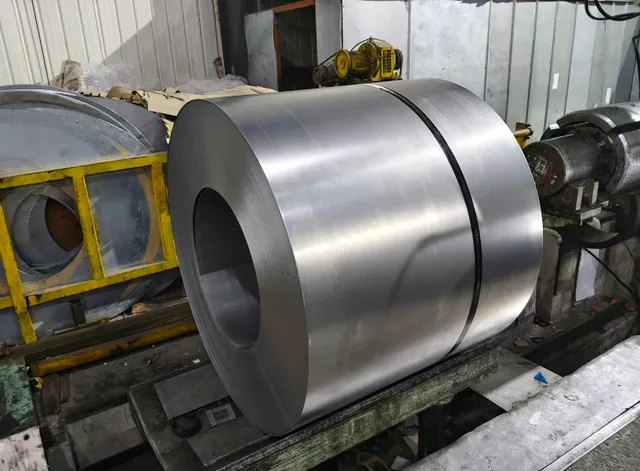
Same carbon chemistry, spheroidized condition, clean shear faces for precision blanking.
Browse fine blanking steel →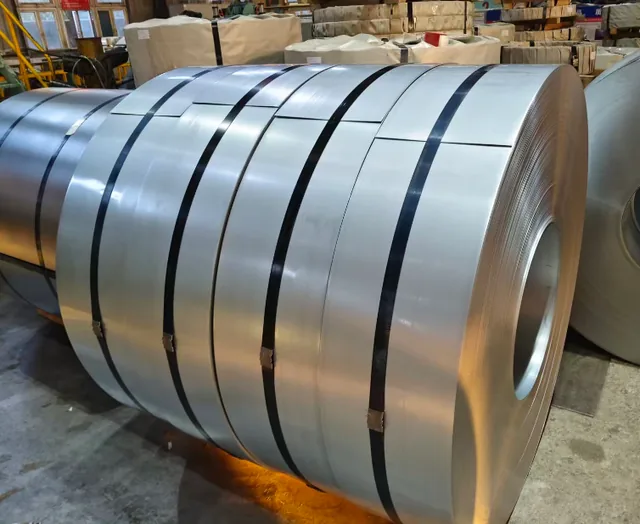
SAE1078 and C75S in spheroidized or hardened-and-tempered condition.
Browse high carbon strip →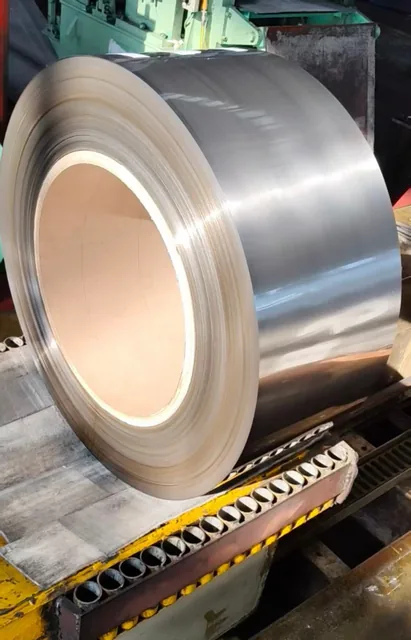
Galvanized +Z, Galvalume +AZ and Magnelis +ZM when corrosion duty moves in.
Browse coated steel →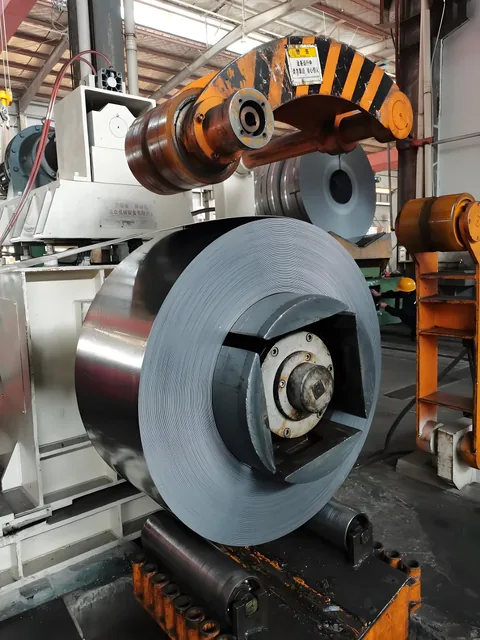
22MnB5+AS hot stamping coil for 1500 MPa class body parts.
Browse press hardening steel →These grade families share material, processing or application territory with the topic on this page.
SAE1045 / C45 grades balancing strength and formability for induction-hardened parts.
40Cr / 42CrMo / 20CrMnTi grades with through-hardening and toughness for loaded components.
Include grade, thickness × width, tonnage, condition and destination port. Our engineers reply within one working day — processing services and application guidance are part of the answer, not an upsell.