
Round feedstock for the fasteners, springs and shafts the world assembles with — cold heading steels 10B21, ML40Cr and ML20MnTiB, spring steels 60Si2MnA and SWRS82A, alloy structural 42CrMo and 20CrMnTi, drawn and annealed in Shanghai.
Wire rod is bought by what happens next: a header, a drawing block, or a machining line. The range is organized around those three routes.
Cold heading (CHQ). A bolt head is formed by hammering the end of a rod at room temperature — the material has to flow, not crack. That is why CHQ grades leave us spheroidized (soft-annealed) with a documented hardness band and controlled decarburization: 10B21 for the mass fastener market, ML20MnTiB for self-tapping screws, ML40Cr and ML42CrMo for the 10.9-class and higher. The boron in 10B21 and the chromium in ML40Cr buy hardenability without pushing carbon up, so the header can still form the head.
Spring steel. 60Si2MnA (Si 1.60–2.00%) gives the fatigue life valve springs and leaf springs need at moderate cost; SWRS82A is the high-carbon JIS G3502 grade drawn and patented into suspension spring wire. Surface condition and decarb depth are the two properties that decide whether a spring survives — both are inspected per coil.
Alloy structural. 42CrMo quenches and tempers deep for studs, shafts and high-strength bolts; 20CrMnTi carburizes for gears and CVT components; SCM435 and 16MnCr5 cover the JIS and EN drawing routes. The price span tells the story: CNY 3,680–10,800 per tonne across the 81-SKU range — from plain 10#/20# rod at the bottom to alloy and micro-alloy grades at the top, at diameters from 0.05 to 46 mm.
Ordinary low carbon rod (10#, 20#) draws and bends fine but will crack or lap in a cold header. CHQ rod is spheroidized, surface-controlled and decarb-limited specifically so fastener heads form cleanly at high speed. If you are heading, buy CHQ; if you are just drawing wire, plain rod is cheaper.
Heading fasteners → CHQ condition. Drawing wire → general rod is enough.Both can be "rod", but the property route is opposite: cold heading wants maximum softness for forming, spring steel wants a microstructure that develops high tensile after drawing or oil tempering. 60Si2MnA and SWRS82A are supplied for the spring route, not the header.
Spring in the final part → spring grade. Fastener in the final part → CHQ grade.42CrMo, 20CrMnTi and SCM435 cost more per tonne but harden in sections plain carbon cannot — 40–46 mm shafts, carburized gears, 10.9-class bolts. The premium buys through-hardening and core toughness where a plain carbon part would fall short in service.
Section or strength class beyond plain carbon → alloy structural.Diameter windows indicative for coil supply; confirm grade, size and condition against your standard at RFQ.
| Grade | Standard / family | Typical Ø | Typical application | Delivery condition |
|---|---|---|---|---|
| 10B21 | JIS SWRCH22A+B / SAE1022+B | 5.5–42 mm | Hex bolts, flange bolts, screws | Spheroidized CHQ coil |
| ML20MnTiB | GB/T 6478 | 6.5–38 mm | Self-tapping & tapping screws | Spheroidized CHQ coil |
| ML40Cr | GB/T 6478 | 6.5–40 mm | 10.9-class high-strength fasteners | Spheroidized CHQ coil |
| ML42CrMo | GB/T 6478 | 8–40 mm | High-strength studs and bolts | Spheroidized CHQ coil |
| 60Si2MnA | GB/T 1222 | 5.5–30 mm | Valve springs, leaf springs, bars | Annealed coil / bar |
| SWRS82A | JIS G3502 | 5.5–13 mm | Suspension & valve spring wire | Patented / drawn wire |
| 42CrMo | GB/T 3077 | 16–46 mm | Quenched & tempered shafts, studs | Annealed / peeled rod |
| 20CrMnTi | GB/T 3077 | 14–46 mm | Carburized gears, CVT parts | Annealed rod |
| SCM435 | JIS G4105 | 12–40 mm | Bolts, shafts, steering parts | Annealed rod |
| 16MnCr5 | EN 10084 | 12–40 mm | Carburized gears and pinions | Annealed rod |
Chemistry, mechanicals, decarburization and surface class confirmed per coil on the Mill Test Certificate.
Typical / indicative values per the cited standards — the delivered heat is confirmed on the MTC.
| Element % | 10B21 (CHQ) | ML40Cr (CHQ) | 60Si2MnA | 42CrMo | 20CrMnTi |
|---|---|---|---|---|---|
| Carbon (C) | 0.18 – 0.23 | 0.37 – 0.44 | 0.56 – 0.64 | 0.38 – 0.45 | 0.17 – 0.23 |
| Silicon (Si) | ≤ 0.10 | 0.17 – 0.37 | 1.60 – 2.00 | 0.17 – 0.37 | 0.17 – 0.37 |
| Manganese (Mn) | 0.60 – 0.90 | 0.50 – 0.80 | 0.60 – 0.90 | 0.50 – 0.80 | 0.80 – 1.10 |
| Chromium (Cr) | — | 0.80 – 1.10 | ≤ 0.35 | 0.90 – 1.20 | 1.00 – 1.30 |
| Molybdenum (Mo) | — | — | — | 0.15 – 0.25 | — |
| Boron (B) | 0.0008 – 0.0030 | — | — | — | — |
| Titanium (Ti) | — | — | — | — | 0.04 – 0.10 |
Indicative reference values only; final chemistry confirmed on the Mill Test Certificate of the delivered heat.
The test: the head is formed in two blows, then threads are rolled — the rod must flow without laps and the finished bolt must hit its property class after quench and temper. Our answer: 10B21 spheroidized CHQ, hardness band documented so the header runs at speed.
The test: small-diameter screw blanks headed and rolled at high rate; tip hardness after heat treat must cut clean into sheet. Our answer: ML20MnTiB CHQ coil, drawn to screw wire size with controlled scale and surface.
The test: wire drawn, coiled and stress-relieved into springs that survive millions of load cycles — surface seams and decarb are fatal. Our answer: 60Si2MnA annealed or SWRS82A patented wire, surface and decarb depth inspected per coil.
The test: rod machined into gear blanks, then case-carburized to a hard wear surface over a tough core. Our answer: 20CrMnTi or 16MnCr5 annealed rod, hardenability band confirmed so the case depth repeats part to part.
The test: Ø20–46 mm sections that must harden through, not just at the skin. Our answer: 42CrMo / SCM435 annealed or peeled rod, Jominy hardenability confirmed for your section size.
Wire rod is a feedstock, not a finished part — the condition it arrives in decides whether your line runs or stops.
Rod drawn to your wire size with die sequence and lubrication managed — the in-house 拉丝 service that turns 5.5 mm rod into the exact wire your header feeds.
Full soft-annealing cycles for CHQ grades, conditioning carbides for clean cold heading and controlling the hardness band. The route is explained in the spheroidizing annealing guide.
Surface prepared for drawing or heading — pickled and coated for the draw bench, or peeled (剥皮) for machined alloy rod where the decarburized skin must go.
Decarburization depth, surface seams, hardness and dimensional checks per coil; Mill Test Certificate issued before export packing.
Substitution must be confirmed against your governing standard and heat treat route.
| Base grade | JIS / EN / SAE family | GB (China) family | Notes |
|---|---|---|---|
| 10B21 (CHQ) | SWRCH22A+B (JIS G3507) · SAE1022+B | ML20MnB / 10B21 (GB/T 6478) | Boron hardenability; mass fasteners |
| ML40Cr (CHQ) | SCr440 CHQ (approx.) | ML40Cr (GB/T 6478) | 10.9-class fastener tier |
| 42CrMo | SCM440 (JIS G4105) · 42CrMo4 (EN 10083) | 42CrMo (GB/T 3077) | Q&T structural tier |
| 20CrMnTi | — (Ti-bearing; 20MnCr5 EN approx.) | 20CrMnTi (GB/T 3077) | Carburizing tier — confirm Ti spec |
| 60Si2MnA | SUP7 (JIS G4801, approx.) | 60Si2MnA (GB/T 1222) | Si-Mn spring tier |
| SWRS82A | SWRS82A (JIS G3502) | — (piano wire family) | Drawn spring wire tier |
| SCM435 | SCM435 (JIS G4105) | 35CrMo-type (GB/T 3077) | Cr-Mo tier |
All cross-standard equivalences indicative; confirm chemistry and hardenability against the governing specification.
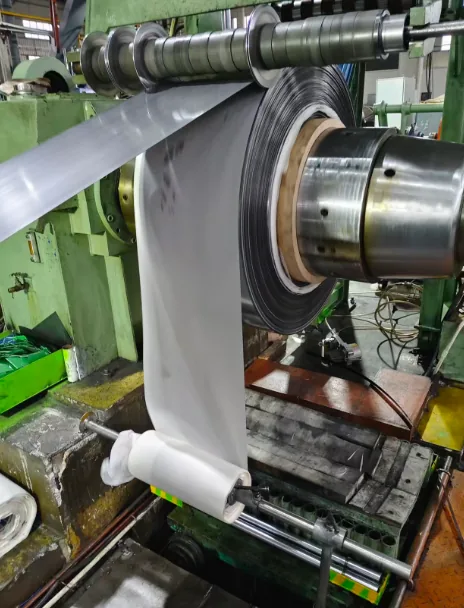
Flat spring strip for stamped clips and leaf springs — the strip counterpart to spring wire rod.
Browse high carbon strip →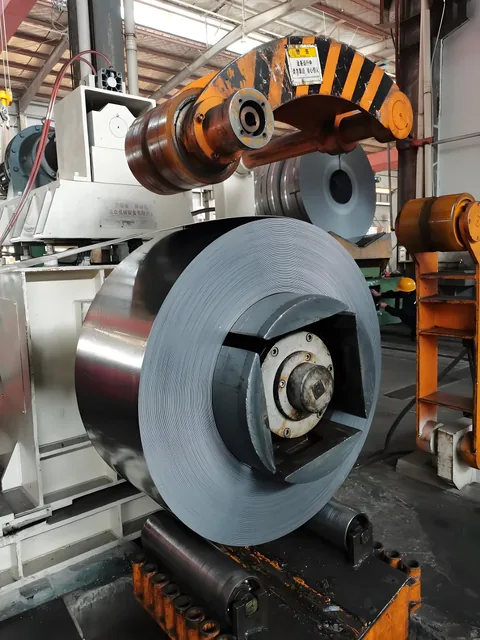
Boron hardening continues into flat product — 22MnB5+AS for hot stamped body structure.
Browse press hardening steel →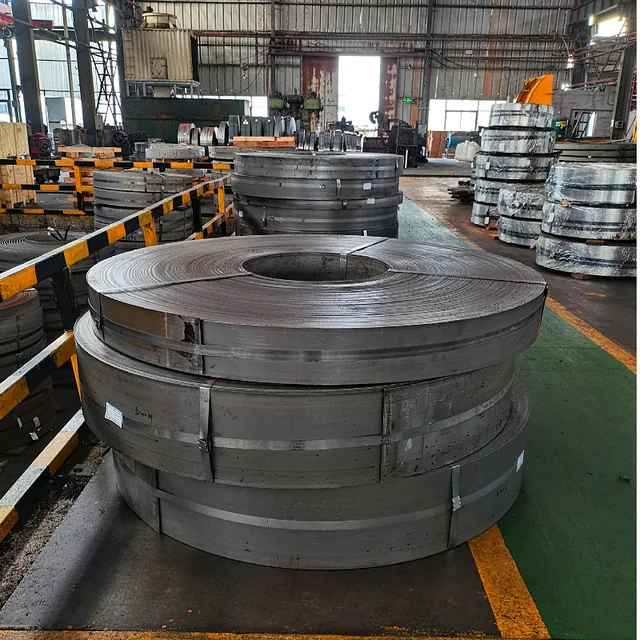
S45C–S55C cold rolled strip for the flat, hardened mechanism parts beside the round fasteners.
Browse cold rolled strip →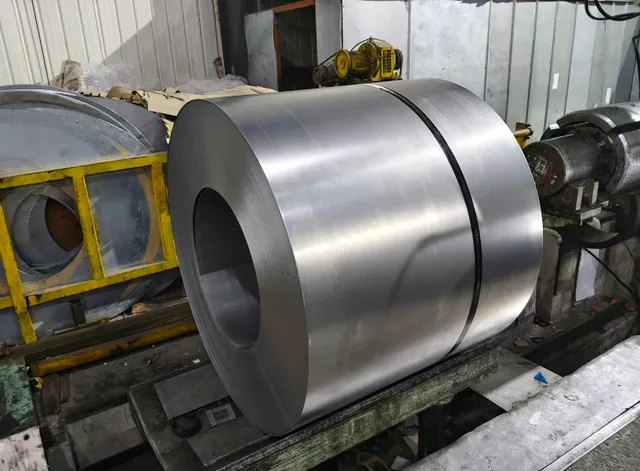
Spheroidized flat stock for precision blanked mechanism parts — the flat route to the same hardened components.
Browse fine blanking steel →These grade families share material, processing or application territory with the topic on this page.
SAE1078 / 65Mn / SK5 grades for hardened parts, springs and cutting edges.
65Mn / 50CrV4 / 60Si2Mn grades with high elastic limit and fatigue resistance.
Send grade or part, diameter, condition (CHQ/annealed/drawn), tonnage and destination port. Our engineers reply within one working day — processing services and application guidance included.