
Boron steel in the condition a hot stamping line actually feeds on — AlSi-coated 22MnB5 coil and strip that austenitizes clean, forms without springback and die-quenches to about 1500 MPa. Stocked in Shanghai, slit, cut and documented on every coil.
Press hardening exists for one reason: cold forming cannot hold a 1500 MPa part in a complex 3D shape.
The process. A 22MnB5 blank is heated to full austenitization (880–950 °C), transferred to a water-cooled die, formed and quenched in the same closing stroke. The die is the heat treatment fixture — that is why hot stamped parts hold tight dimensional tolerances and show essentially no springback, at tensile strengths around 1500 MPa. The trade-off is ductility: elongation after stamping is typically in the single digits, so the family is for load paths, not crush zones.
Why the coating matters. The +AS AlSi coating is applied on the hot-dip line before delivery. In the furnace it melts and alloys with the steel surface, forming a layer that blocks decarburization and scale. An uncoated blank would need shot blasting before painting and would carry a soft, decarburized surface that hurts fatigue on loaded body parts. If you see +AS on a grade, it is a process promise, not a corrosion coating.
What we actually stock. 31 grades across the strength ladder — 1500 MPa class (22MnB5+AS, Usibor1500P, T1500P, T1500P-SVW, SABC1470+AS, AC1500HS+AS), intermediate classes (CR780/980HS+AS, HC370/550HS+AS, CR950/1300HS+AS) and the newest 1800–2000 MPa entries (CR1200/1800HS+AS, AS2000, TA-2000). All are supplied as AlSi-coated coil or strip with the coating weight and gauge confirmed on the Mill Test Certificate; prices run CNY 3,680–6,890 per tonne depending on grade tier and gauge.
Cold rolled dual-phase (HC420/780DP, HC550/980DP) forms at room temperature, keeps double-digit elongation and costs less per tonne — but it springs back and struggles past ~1200 MPa in complex shapes. Press hardening trades ductility for 1500 MPa with zero springback. Structural reinforcement geometry decides which one wins.
Choose hot stamping for 3D reinforcement parts; cold AHSS for panels that must bend and stretch.Uncoated 22MnB5 is cheaper per tonne and still quenches to 1500 MPa, but it scales in the furnace and decarburizes at the surface — requiring shot blasting and accepting a fatigue penalty. +AS blanks go straight to phosphating. The coating premium usually pays for itself in process cost and paint-shop time.
Choose +AS when the part is painted and fatigue-loaded — which is most body structure.The newest grades (CR1200/1800HS+AS, AS2000, TA-2000) push tensile toward 2000 MPa for ultra-lightweight designs, but demand tighter furnace windows and more robust dies. 22MnB5-class remains the workhorse for B-pillars, roof rails and bumper beams.
Choose the 1500 MPa class for proven process stability; the 1800+ class only with validated furnace control.All grades available as coil or strip; blanks by arrangement. Equivalents and thickness windows indicative — confirm on MTC and OEM drawing.
| Grade | Standard / family | Typical thickness | Typical application | Delivery condition |
|---|---|---|---|---|
| 22MnB5+AS | EN 10336 / VDA 239-100 | 1.0–3.0 mm | B-pillar, roof rail, bumper beam | AlSi-coated coil / strip |
| Usibor1500P | ArcelorMittal brand | 1.0–2.5 mm | Body structural reinforcements | AlSi-coated, AS150 class |
| T1500P | Baosteel-type | 0.8–2.5 mm | A-pillar, side impact, tunnel member | AlSi-coated coil / strip |
| T1500P-SVW | OEM spec (SVW) | 1.0–2.0 mm | OEM-defined body parts | AlSi-coated |
| SABC1470+AS | OEM spec (GMW) | 1.2–2.0 mm | Door intrusion beams | AlSi-coated |
| CR780/980HS+AS | EN 10336 | 1.0–2.5 mm | Moderately loaded structures | AlSi-coated |
| CR950/1300HS+AS | EN 10336 | 1.0–2.5 mm | High-load reinforcement | AlSi-coated |
| CR1200/1800HS+AS | EN 10336 | 1.0–2.0 mm | Ultra-lightweight body structure | AlSi-coated |
| HC370/550HS+AS | EN 10336 | 1.0–2.0 mm | Low-load hot stamped parts | AlSi-coated or bare |
Grade availability and coating weight confirmed at quoting. All values indicative until confirmed on the Mill Test Certificate.
Typical / indicative values — the delivered heat and your process validation govern the final numbers.
| Element | Typical range (%) |
|---|---|
| Carbon (C) | 0.20 – 0.25 |
| Manganese (Mn) | 1.10 – 1.40 |
| Silicon (Si) | ≤ 0.40 |
| Chromium (Cr) | ≤ 0.35 |
| Titanium (Ti) | 0.02 – 0.05 |
| Boron (B) | 0.0008 – 0.0050 |
| Phosphorus / Sulfur (P / S) | ≤ 0.025 / ≤ 0.005 |
| Condition | Tensile (typ.) | Yield (typ.) | Elongation (typ.) | Typical use |
|---|---|---|---|---|
| As-delivered (coil, soft) | 600 – 750 MPa | 400 – 550 MPa | ≥ 10% | Blank, form in the hot press |
| After press hardening | ~1500 MPa (1300–1700) | ~1000 – 1200 MPa | ~5% | B-pillar, beams, reinforcements |
As-stamped values depend on austenitizing time, temperature and die cooling rate; confirm by your process validation. Chemistry indicative per EN 10336 / VDA 239-100 and confirmed on the MTC.
Why hot stamping: the pillar must be a single 3D part with a tailored strength profile — soft at the base, 1500 MPa at the beltline — formed without springback. Our answer: 1.2–1.6 mm 22MnB5+AS coil slit to furnace feed width, coating integrity verified, MTC per coil.
Why hot stamping: a closed-section beam that must crush in a controlled mode while holding load. Our answer: 1.5–2.5 mm 22MnB5+AS, supplied as cut blanks with edge quality that keeps the furnace and die clean.
Why hot stamping: a slender round or hat-section beam loaded in bending at 1500 MPa class. Our answer: SABC1470+AS or T1500P per the OEM drawing, with the coating weight class documented for welding studies.
Why hot stamping: long, deep-drawn reinforcement channels where cold springback would wreck dimensional control. Our answer: 1.0–1.5 mm coil, flatness and gauge class held so the blank nests correctly in the die.
Hot stamping is a material-and-process package; the coil you receive must be right for the furnace window you run.
Coil slit to furnace feed width or leveled and cut to sheet size, with edge burr controlled so blanks load cleanly into the heating line.
Blanks laser-cut to net shape from coated coil, edges dressed for die loading — the step that keeps furnace time consistent part to part.
AlSi coating weight and surface condition checked against the coating class; no scale, no bare patches on the delivered surface.
Chemistry, gauge, coating class and heat number documented per coil. Understand the full route in the hot stamping 22MnB5 guide.
Brand names differ; the material concept is shared. Substitution is routine but must be signed off against the OEM drawing.
| Generic grade | Brand / OEM designation | Coating | Notes |
|---|---|---|---|
| 22MnB5+AS | Usibor1500P · T1500P · AC1500HS+AS | AlSi (AS150 class) | Same ~1500 MPa concept; brand per drawing |
| 22MnB5 (uncoated) | Usibor1500 · T1500 | — | Needs shot blasting; cheaper |
| OEM 1470 class | SABC1470+AS · NSSQAS1500-S | AlSi | OEM-specific chemistry limits |
| OEM 1500 + SVW | T1500P-SVW | AlSi | SAIC-Volkswagen release spec |
| 980 class | CR780/980HS+AS · HC950/1300HS+AS | AlSi | Intermediate strength tier |
| 1800–2000 class | CR1200/1800HS+AS · AS2000 · TA-2000 | AlSi | Next-gen lightweight tier |
Cross-brand equivalences indicative; always confirm coating weight and chemistry limits against the governing OEM specification.
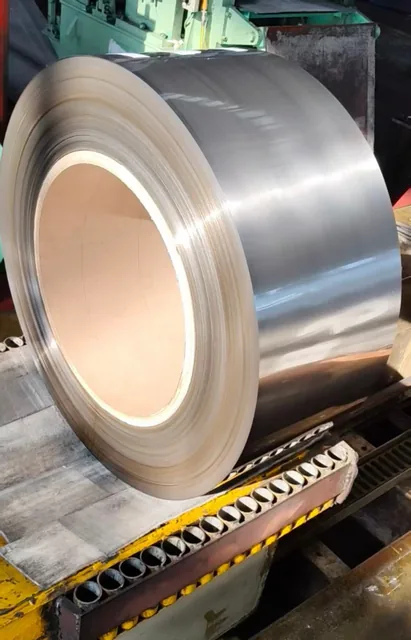
The +AS coating system also appears here beside +Z, +AZ, +ZM and +ZE for non-structural corrosion duty.
Browse coated steel sheet →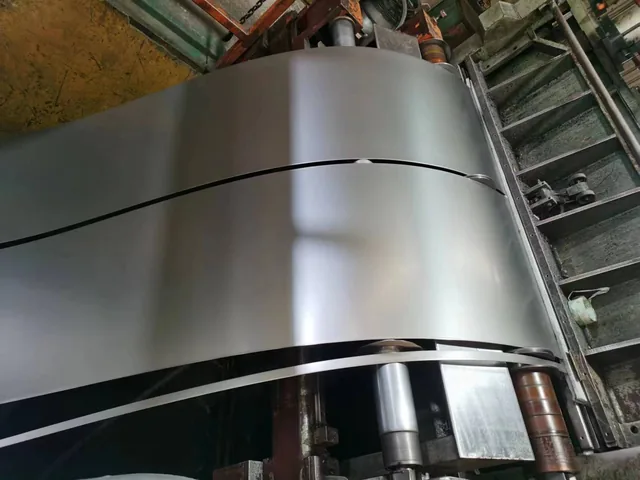
Dual-phase and complex-phase cold rolled steels for room-temperature forming at 980–1180 MPa.
Browse cold rolled range →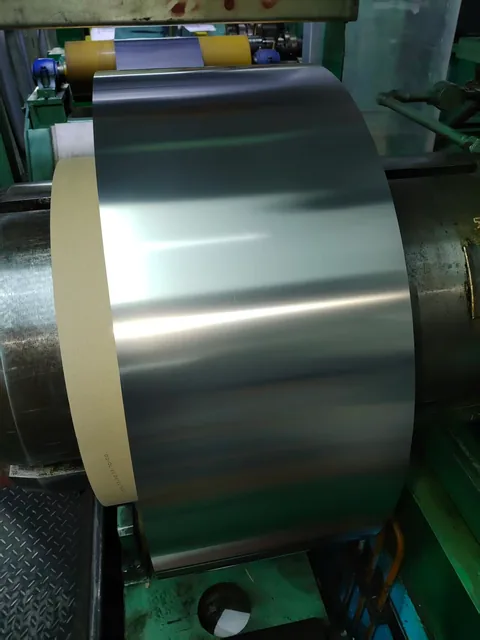
Boron grades continue into wire rod — 20MnB5, 26MnB5 — for bolts and fasteners in the same assemblies.
Browse wire rod steel →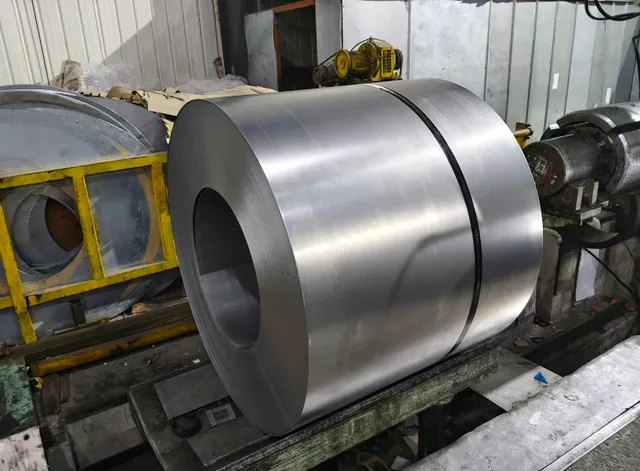
Room-temperature precision blanking counterpart for hardened mechanism parts rather than body structure.
Browse fine blanking steel →These grade families share material, processing or application territory with the topic on this page.
DP / TRIP / HSLA grades (HC180YD, HC260LA, DP590) combining strength with formability for lightweighting.
SPHC / Q235 / Q345 scale-free coils with oil coating, cost-effective for structural and tube applications.
Send grade or drawing, gauge × width, tonnage and destination port. Our engineers reply within one working day — processing services and application guidance included.