
Cr-Mo and Cr-Mn-Ti alloy strip for parts plain carbon cannot carry: 42CrMo at ≥1080 MPa through-hardened, 20CrMnTi and 16MnCr5 carburized for wear surfaces, 50CrV4 for fatigue-loaded sections, and 68CrNiMo for the highest strength tier.
Chromium + molybdenum (42CrMo). Cr deepens hardenability; Mo prevents temper brittleness. The result: through-hardening in sections up to ~50 mm and ≥1080 MPa tensile after Q&T — the standard for transmission gears, axle shafts and 12.9-class bolts. Carburizing grades (20CrMnTi, 16MnCr5) are low-carbon (0.14–0.23% C) grades that arrive soft and machinable, then are carburized to a hard wear surface (HRC 56–64) over a tough core. 20CrMnTi adds Ti for grain refinement — preferred for automotive transmission gears.
50CrV4 sits on the boundary between structural and spring steel — its Cr-V chemistry optimizes fatigue resistance, reaching ≥1250 MPa after Q&T. 68CrNiMo is the highest-strength tier: 0.65–0.72% C, 1.40–1.70% Ni, 0.20–0.30% Mo, reaching tensile above 1400 MPa. The numbers: 42CrMo ≥1080 MPa, 20CrMnTi carburized surface HRC 56–62, 50CrV4 ≥1250 MPa, 68CrNiMo >1400 MPa, price band CNY 4,120–4,460/t.
42CrMo hardens through the full section. 20CrMnTi/16MnCr5 are carburized: only the surface hardens, leaving a tough core. Choose 42CrMo for bulk strength (shafts, bolts); choose carburizing for wear surface + tough core (gears, pins).
Medium carbon (S45C–S55C) is cheaper but only through-hardens under ~12 mm and tops out ~800–900 MPa. 42CrMo through-hardens to ~50 mm and reaches ≥1080 MPa with better toughness. Under 12 mm / 800 MPa, medium carbon is economic; above that threshold, the alloy premium pays. See medium carbon strip.
50CrV4 is listed in both families. If your part deflects and returns (valve springs, clutch discs), treat it as spring steel — see the spring steel strip page. If it carries static structural load (brackets, links, shims), treat it as structural and specify Q&T to a tensile band. Same grade, two specification philosophies.
Typical / indicative — confirmed on the MTC.
| Element | 42CrMo | 20CrMnTi | 16MnCr5 | 50CrV4 | 68CrNiMo |
|---|---|---|---|---|---|
| C % | 0.38–0.45 | 0.17–0.23 | 0.14–0.19 | 0.47–0.55 | 0.65–0.72 |
| Mn % | 0.50–0.80 | 0.80–1.10 | 1.00–1.30 | 0.70–1.10 | 0.50–0.80 |
| Si % | 0.17–0.37 | 0.17–0.37 | ≤0.40 | ≤0.40 | 0.17–0.37 |
| Cr % | 0.90–1.20 | 1.00–1.30 | 0.80–1.10 | 0.90–1.20 | 0.70–0.90 |
| Mo % | 0.15–0.25 | — | — | — | 0.20–0.30 |
| Ni % | ≤0.30 | ≤0.30 | ≤0.40 | — | 1.40–1.70 |
| V % | — | — | — | 0.10–0.25 | — |
| Ti % | — | 0.04–0.10 | — | — | — |
68CrNiMo chemistry is typical for the stocked grade; confirm exact spec at RFQ. Typical/indicative, confirm at RFQ.
Typical / indicative — confirmed per coil on the MTC.
| Grade | Condition | Tensile (MPa) | Yield (MPa) | Elong. (%) | Hardness | Typical use |
|---|---|---|---|---|---|---|
| 42CrMo | Q&T | ≥1,080 | ≥930 | ≥12 | HRC 32–38 | Shafts, gears, 12.9 bolts |
| 42CrMo | Annealed | ≤700 | — | — | HB ≤217 | Machining / blanking feedstock |
| 20CrMnTi | Carburized & quenched | ≥1,080 (core) | ≥835 | ≥10 | Surface HRC 56–62 | Transmission gears, cam followers |
| 16MnCr5 | Carburized & quenched | ≥900 (core) | ≥600 | ≥11 | Surface HRC 58–64 | Gears, pins, worm wheels |
| 50CrV4 | Q&T | ≥1,250 | ≥1,100 | ≥8 | HRC 40–48 | Valve springs, clutch discs |
| 68CrNiMo | Q&T | ≥1,400 | ≥1,200 | ≥7 | HRC 44–52 | High-strength structural, heavy springs |
Carburized grade tensile values are for the core after carburizing and quenching; surface hardness depends on case depth and carbon potential. Typical/indicative, confirm at RFQ.
Substitution must be confirmed against your governing standard — approximate equivalent, not a certification.
| GB (China) | ASTM / SAE | EN (European) | JIS (Japanese) | Notes |
|---|---|---|---|---|
| 42CrMo | 4140 | 42CrMo4 | SCM440 | Through-hardening Cr-Mo; widely interchangeable |
| 20CrMnTi | — (no direct equiv.) | 20MnCr5 (approx.) | SCM420 (approx.) | Ti-refined carburizing; verify grain size |
| — (no direct GB) | 5115 (approx.) | 16MnCr5 | SCr415 (approx.) | European carburizing standard |
| 50CrVA | 6150 | 50CrV4 | SUP10 | Cr-V spring/structural; highly interchangeable |
| — (no direct GB) | 4340 modified (approx.) | — (special grade) | — (special grade) | High-strength Ni-Mo; confirm spec at RFQ |
20CrMnTi's titanium addition has no direct equivalent in SAE/ASTM grades. Final grade selection confirmed from your drawing and heat treat route.
The test: 20CrMnTi or 16MnCr5 blanked/forged, then carburized to 0.6–1.0 mm case and quenched — tooth surface HRC 58–62, core tough for shock. Grain size during carburizing determines distortion. Our answer: Ti-refined 20CrMnTi for fine grain and low distortion, or 16MnCr5 for European drawings, supplied annealed. See automotive fine blanking application.
The test: 42CrMo through-hardened by oil Q&T to ≥1080 MPa and HRC 32–38, uniform hardness across section — no soft core, no brittle surface. Torsional fatigue depends on surface quality and decarb. Our answer: 42CrMo stocked from 5.5 mm wire/rod and precision-rolled to strip, decarb verified per coil.
The test: 42CrMo or 68CrNiMo headed and threaded, then Q&T to 12.9-class (≥1220 MPa tensile, ≥1100 MPa yield) — must survive proof load without set and resist delayed fracture. Our answer: controlled chemistry with low P/S, consistent hardenability, full MTC.
The test: 50CrV4 Q&T to HRC 44–48, cycled millions of times at engine-bay temperature — V carbides resist softening above 400°C, fatigue depends on surface finish and decarb. Our answer: 50CrV4 with polished/ground surface option, decarb verified. See clutch disc spring application and the spring steel family page.
Multi-pass rolling to your gauge tolerance with controlled surface finish — critical for gear blanks and bolt stock.
Full annealing for machining feedstock, spheroidizing for blanking of high-carbon alloy grades. See the spheroidizing guide.
Coils slit to narrow progressive-die widths with burr and camber managed. Read edge burr control.
Gauge, surface, hardness and decarb checks per coil; MTC issued before export. Learn to read one in the MTC guide.
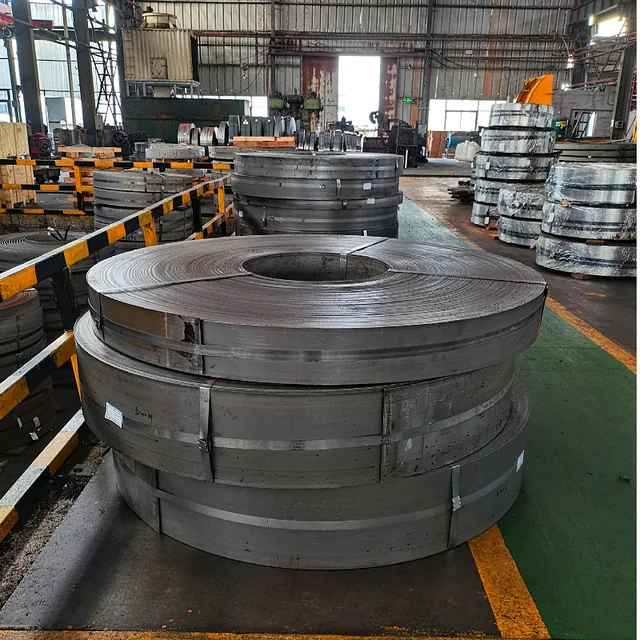
S10C–S55C and C45E–C60E for shafts, gears and fasteners under 12 mm section.
Browse medium carbon →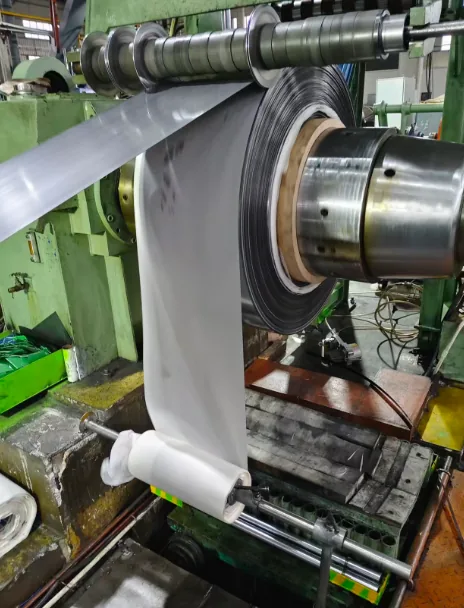
50CrV4, 51CrV4 and 60Si2MnA — the spring-specific view of 50CrV4.
Browse spring steel →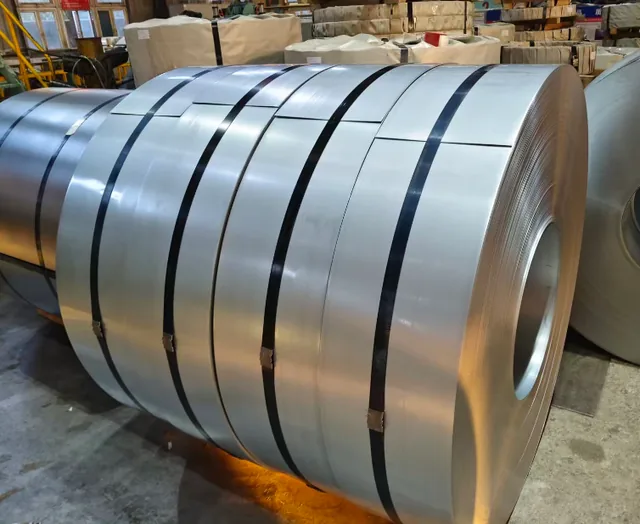
SAE1065–1078, C67S/C75S, SK5/SK7 and 65Mn for blades, tools and thin springs.
Browse high carbon →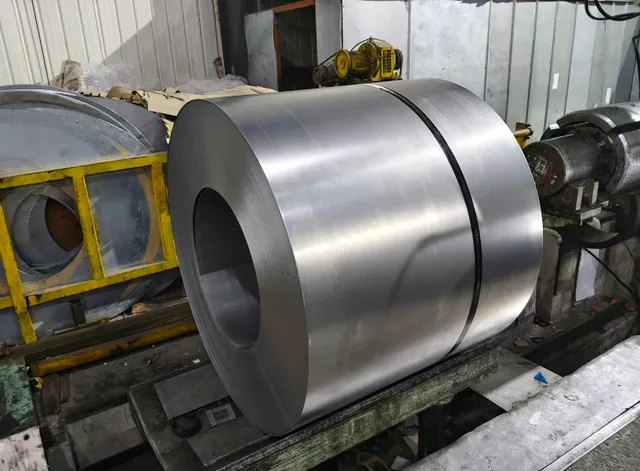
Alloy and carbon grades in spheroidized condition for clean shear faces.
Browse fine blanking →Include grade, thickness × width, tonnage, delivery condition and destination port. Engineers reply within one working day — processing services and shipping included.