
The hardenable tier of precision strip: 0.60–0.85% carbon across SAE1065–1078, C67S/C75S, SK5/SK7 and 65Mn, quenched to HRC 55–62. Supplied spheroidized for blanking or hardened-and-tempered for finished springs and blades.
The carbon ladder. SAE1065 and C67S sit at 0.60–0.72% C — the entry point for wear-resistant parts. SAE1070 and SAE1074 move to 0.65–0.80% C and are the workhorse grades for saw blade bodies and general springs. SAE1078 and SK5 top the range at 0.72–0.90% C, reaching HRC 58–62 for cutting tools. 65Mn is the outlier: same carbon band but 0.90–1.20% Mn (roughly double SAE1074), giving deeper hardenability and higher yield strength — the standard spring-grade substitute in China-sourced supply chains.
The numbers that separate this page from a generic listing: 0.60–0.85% carbon across the stocked range, HRC 55–62 as-quenched, a 0.05–13.5 mm thickness window, and a realised price band of CNY 4,120–5,680/t across nine SKUs — the spread between SK7 general-purpose strip and SAE1078 premium blade stock. Most strip is supplied spheroidized (soft-annealed) for blanking before the customer hardens; H&T strip is specified for simple flat springs and shims used as-sheared.
Medium carbon (S45C–S55C) tops out around HRC 50 and is chosen for shafts, gears and fasteners that need toughness. High carbon reaches HRC 55–62 and trades toughness for wear resistance. If your part is a cutting edge or spring, high carbon earns the premium; if it takes impact loads, step down to medium carbon strip.
Choose high carbon for hardness/wear; medium carbon for toughness.SAE1074/C75S hardens well in thin sections but loses through-hardening above ~3 mm. 50CrV4 adds Cr and V to harden deeper and resist fatigue at elevated temperatures. For thin room-temperature springs, plain carbon is economic; for thicker sections, cyclic loading or engine-bay heat, move to the spring steel strip family.
Choose alloy spring when section/fatigue/temperature exceed plain carbon.Spheroidized strip is soft (HRB 80–90) and blanks cleanly before the customer hardens — standard for complex geometries. H&T strip arrives at HRC 40–50 and is sheared to final shape with no further heat treat — standard for simple flat springs and shims. The wrong condition is the most common cause of die breakage on the first run.
Choose spheroidized when you blank then harden; H&T when used as-sheared.Typical / indicative values per the cited standards — confirmed on the MTC.
| Element | SAE1065 | SAE1074 | SAE1078 | C67S | C75S | 65Mn |
|---|---|---|---|---|---|---|
| C % | 0.60–0.70 | 0.70–0.80 | 0.72–0.85 | 0.65–0.72 | 0.70–0.80 | 0.62–0.70 |
| Mn % | 0.60–0.90 | 0.50–0.80 | 0.60–0.90 | 0.50–0.80 | 0.60–0.90 | 0.90–1.20 |
| Si % | ≤0.35 | ≤0.35 | ≤0.35 | 0.15–0.35 | 0.15–0.35 | 0.17–0.37 |
| P % | ≤0.040 | ≤0.040 | ≤0.040 | ≤0.030 | ≤0.030 | ≤0.035 |
| S % | ≤0.050 | ≤0.050 | ≤0.050 | ≤0.030 | ≤0.030 | ≤0.035 |
SK5 (JIS G4401): C 0.80–0.90, Mn ≤0.50. SK7: C 0.60–0.70, Mn ≤0.50. Typical/indicative, confirm at RFQ.
Typical / indicative — confirmed per coil on the MTC.
| Grade | Condition | Tensile (MPa) | Yield (MPa) | Hardness | Typical use |
|---|---|---|---|---|---|
| SAE1065 | Spheroidized | ≤600 | — | HRB 80–90 | Blank-then-harden blades |
| SAE1074 | Spheroidized | ≤640 | — | HRB 82–92 | Saw blade bodies, springs |
| SAE1078 | H&T | 1,400–1,800 | ≥1,200 | HRC 45–52 | Finished springs, clutch discs |
| C75S | Q&T | 1,200–1,600 | ≥1,000 | HRC 42–50 | Flat springs, saw blades, tools |
| SK5 | Q&T | — | — | HRC 58–62 (as-quenched) | Cutting tools, utility blades |
| 65Mn | Q&T | ≥980 | ≥785 | HRC 42–48 | Flat springs, washers, clutch parts |
As-quenched hardness for SAE1074/1078 and C75S in thin section is HRC 55–62; tempered hardness is lower. Typical/indicative, confirm at RFQ.
Substitution must be confirmed against your governing standard — approximate equivalent, not a certification.
| GB (China) | ASTM / SAE | EN (European) | JIS (Japanese) | Notes |
|---|---|---|---|---|
| 65# | SAE1065 | C67S (approx.) | SK7 (approx.) | Entry high carbon; general blades |
| 75# | SAE1074 | C75S | SK5 (approx.) | Workhorse; springs and blades |
| T8 / T8A | SAE1078 (approx.) | C75S (high C end) | SK5 | Tool-grade; cutting edges HRC 58–62 |
| 65Mn | SAE1566 (approx.) | — (Mn-alloyed) | — | Spring-grade; deep hardening |
All cross-standard grades shown as approximate equivalents; final grade selection confirmed from your drawing and heat treat route.
The test: SAE1074 or C75S blanked spheroidized, then tooth-hardened by induction — body stays tough while teeth reach HRC 58–62. Decarb on the tooth surface causes chipping. Our answer: controlled-decarb strip with consistent hardenability. See saw blade application page.
The test: SK5 or SAE1078 H&T to HRC 52–56, sheared to segments with a scored snap line. Must hold an edge through 5–7 breaks without snapping. Our answer: H&T strip at tight hardness band, precision-rolled gauge for repeatable snap score depth.
The test: SAE1078 or 65Mn Q&T to HRC 42–48, cycled millions of times under compressive load. Fatigue life depends on surface quality and decarb control. Our answer: ground/polished surface option, decarb verified per coil. See clutch spring application page.
The test: thin SK5/SK7 strip blanked to scalpel profiles, then hardened and sterilized. Surface must be defect-free; chemistry consistent for repeatable hardening. Our answer: precision-rolled thin gauge with inspected surface, full MTC traceability. See medical blade application page.
Multi-pass rolling to your gauge tolerance with controlled surface finish — critical for thin blade and spring gauges.
Full-cycle soft annealing for blanking feedstock. Understand the cycle in the spheroidizing guide.
Coils slit to narrow progressive-die widths with burr and camber managed. Read edge burr control.
Gauge, surface, hardness and decarb checks per coil; MTC issued before export. Learn to read one in the MTC guide.
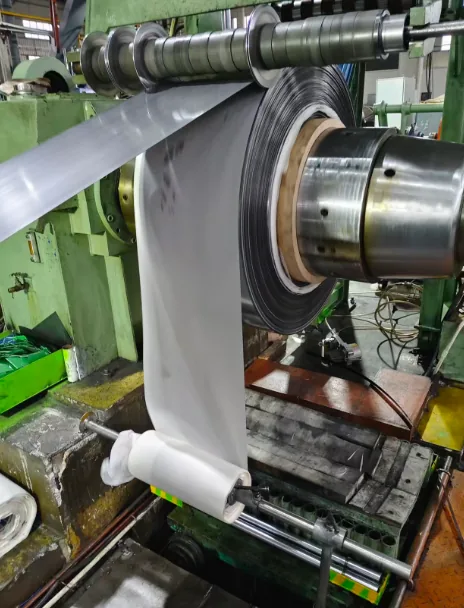
50CrV4, 51CrV4 and 60Si2MnA for fatigue-loaded springs beyond plain carbon.
Browse spring steel →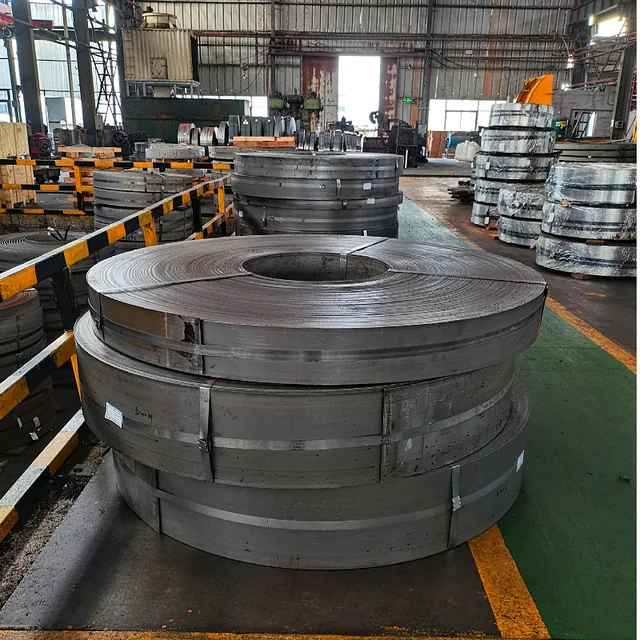
S10C–S55C and C45E–C60E for shafts, gears and fasteners needing toughness.
Browse medium carbon →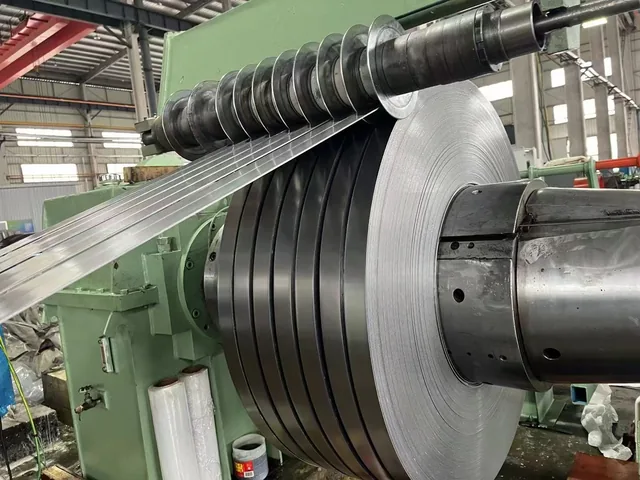
42CrMo, 20CrMnTi and 16MnCr5 for Q&T gears, shafts and high-strength bolts.
Browse alloy structural →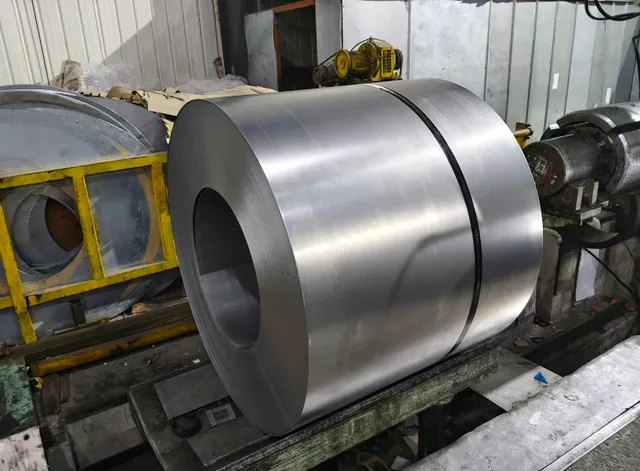
Same carbon chemistry in spheroidized condition for clean shear faces.
Browse fine blanking →Include grade, thickness × width, tonnage, delivery condition and destination port. Our engineers reply within one working day — processing services and order process are part of the answer.