
Carbon and low-alloy tool steel delivered soft enough to blank and hard enough to hold an edge. SK5 sits at 0.80–0.90% carbon and reaches HRC 58–62 after quenching — the working range for knives, industrial blades and woodworking cutting edges.
Tool steel strip is selected by the edge it must hold and the load it must survive. Carbon content sets both — and the catalogue follows that logic.
Medium-high carbon (SK7, SK85). SK7 at 0.60–0.70% C is the entry tier: tough, hardens to HRC 56–60, for general-purpose blades and spring-loaded cutters.
High carbon (SK5, SK4, SK95). The volume tier. SK5 at 0.80–0.90% carbon reaches HRC 58–62 after quenching — for industrial knife blades, woodworking planer knives and food-processing cutters.
Very high carbon and alloyed (SK2, SK120, SKS51, 95Cr15). SK2 (1.05–1.15% C) and SK120 deliver HRC 62–65 for files and fine engraving tools. SKS51 adds Cr and Si for thicker-section hardenability.
Spec errors happen at the boundary.
SAE1078 and C75S are high-carbon strips for springs and blade bodies; tool steel (SK5, SK2) is certified to JIS G4401 with tighter carbon control. If the part is a cutting edge, buy tool steel — otherwise the SAE1078 high carbon strip costs less.
Choose tool steel when edge hardness and wear resistance are the spec.SK5 and SK2 rust. 95Cr15 does not — at the cost of two HRC points.
Choose 95Cr15 when the environment, not the edge load, is the failure mode.We supply spheroidized so you can blank and grind before hardening. Pre-hardened strip (HRC 45–52) is available for direct machining without a heat treat step — a narrower thickness window.
Choose spheroidized when you blank and harden in-house; pre-hardened when you machine only.Indicative values per JIS G4401 and equivalent standards — confirmed on the MTC.
| Grade | C % | Si % | Mn % | Cr % | P % | S % |
|---|---|---|---|---|---|---|
| SK2 | 1.05–1.15 | ≤0.35 | ≤0.30 | ≤0.20 | ≤0.030 | ≤0.030 |
| SK5 | 0.80–0.90 | ≤0.35 | ≤0.50 | ≤0.20 | ≤0.030 | ≤0.030 |
| SK7 | 0.60–0.70 | ≤0.35 | ≤0.50 | ≤0.20 | ≤0.030 | ≤0.030 |
| SKS51 | 0.85–1.00 | 0.15–0.50 | 0.30–0.60 | 0.10–0.50 | ≤0.030 | ≤0.030 |
| 95Cr15 | 0.90–1.00 | ≤1.00 | ≤0.80 | 14.0–16.0 | ≤0.035 | ≤0.030 |
SK4, SK85, SK95 and SK120 follow the same JIS G4401 framework with carbon bands between SK5 and SK2.
We ship spheroidized; you quench. Both bands are documented — the as-delivered value on the MTC, the as-quenched value as a target range.
| Grade | As-delivered (spheroidized) HB | As-quenched HRC | Quench medium | Typical use |
|---|---|---|---|---|
| SK2 | ≤217 | 62–65 | Water | Files, scribers, fine cutting tools |
| SK5 | ≤217 | 58–62 | Water / oil | Knives, industrial blades, woodworking edges |
| SK7 | ≤217 | 56–60 | Water / oil | General blades, spring-loaded cutters |
| SKS51 | ≤223 | 58–62 | Oil | Thicker-section blades, shear knives |
| 95Cr15 | ≤255 | 56–58 | Oil / air | Food-contact blades, surgical blanks, humid-environment cutters |
Hardness values are typical / indicative and depend on section thickness, quenchant and tempering.
Equivalents are approximate — chemistry and hardenability can differ by source. Confirm the final grade against your governing standard.
| JIS (this page) | ASTM / AISI | EN (W-Nr.) | GB (China) | Notes |
|---|---|---|---|---|
| SK2 | W1A-10½ | C110U (1.1545) | T10 / T10A | Very high carbon water-hardening tool steel |
| SK5 | W1A-9 | C85U (1.1645) | T8MnA / T9 | General-purpose carbon tool steel — the volume grade |
| SK7 | W1A-7 | C70U (1.1520) | T7 | Lower carbon, higher toughness |
| SKS51 | — (L6-type approx.) | 90MnCrV8 (1.2540) approx. | 9CrSi approx. | Low-alloy, oil-hardening, better hardenability in thick sections |
| 95Cr15 | 440C (AISI A276) | X105CrMo17 (1.4125) | 9Cr18 / 9Cr18Mo | Martensitic stainless tool steel — corrosion-resistant edge |
Final grade selection confirmed from your drawing, heat treat route and governing standard.
Where the grade choice shows up in edge life.
The test: 1.5–4.0 mm SK5 blanked to a long straight edge, quenched to HRC 58–62, precision ground. Our answer: spheroidized SK5 with controlled decarb, slit to blade width, flatness managed for grinding.
The test: 3.0–6.0 mm SK5 or SKS51, hardened to HRC 58–61, edge geometry held to microns. Our answer: SKS51 for thicker sections where oil hardening gives uniform hardness through the knife body.
The test: 0.8–2.5 mm 95Cr15, blanked, hardened to HRC 56–58, polished. Must resist washdown corrosion. See our surgical blade application.
The test: 1.0–3.0 mm SK5 or SK7 blanked into circular saw bodies, hardened to HRC 45–52. Flatness and tension critical. See our high-carbon saw blade application.
All in-house in Shanghai — one contract, one MTC, one contact.
Full-cycle soft annealing rounds carbides for clean blanking. See the spheroidizing guide.
Multi-pass rolling to your gauge tolerance with controlled surface finish and decarb depth — critical for blades where the edge is ground from the strip surface.
Coils slit to narrow blade widths or leveled and cut to sheet — burr, camber and width tolerance managed and documented.
Gauge, surface, hardness and flatness checks per coil; MTC with chemistry issued before export. See the MTC guide.
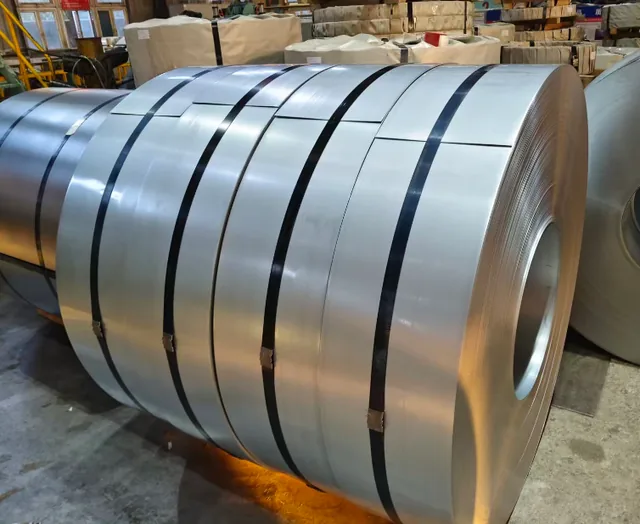
SAE1078 and C75S for springs, blade bodies and hardened precision parts — the economic alternative when JIS tool certification is not required.
Browse high carbon strip →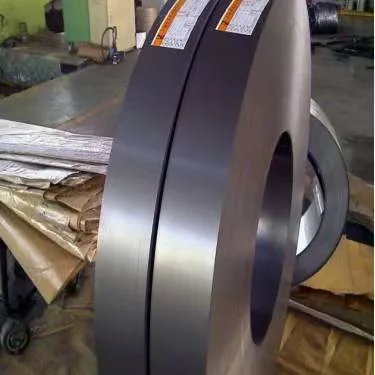
GCr15, 100Cr6 and SUJ2 for rolling contact components — high carbon chromium grades that overlap with tool steel in chemistry but are certified for fatigue life.
Browse bearing steel strip →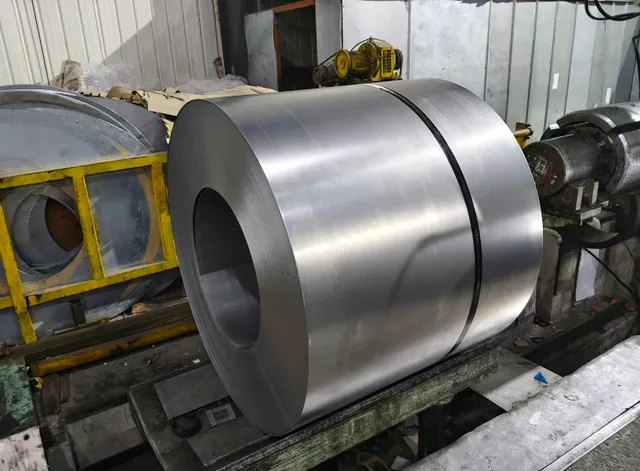
Medium carbon strip in spheroidized condition for net-shape blanking of mechanical components — the same annealing route, applied to structural parts.
Browse fine blanking steel →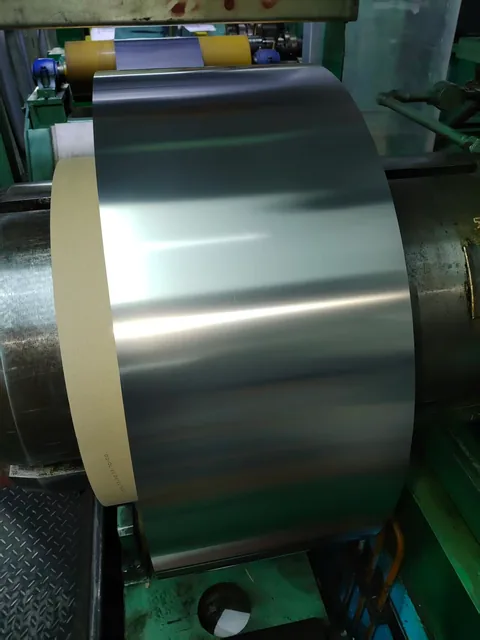
Cold heading, spring and alloy structural wire rod — the round-bar counterpart when your tool steel part is drawn rather than rolled.
Browse wire rod steel →Include grade, thickness × width, tonnage, hardening route and destination port.