
Fine Blanking Process: How the Three-Force System Works
Fine blanking controls material flow before and during separation. The press, die, strip and lubrication strategy must be evaluated as one process; machine tonnage alone does not determine the finished edge.
Three Controlled Forces, One Cutting Event
V-ring or Blank-Holder Force
The blank holder restrains lateral material flow around the cutting contour before penetration.
Counterforce
Counterpressure supports the part through the cut and helps control flatness, rollover and fracture behavior.
Cutting Force
The main ram drives the punch through the material while the other two forces remain coordinated.
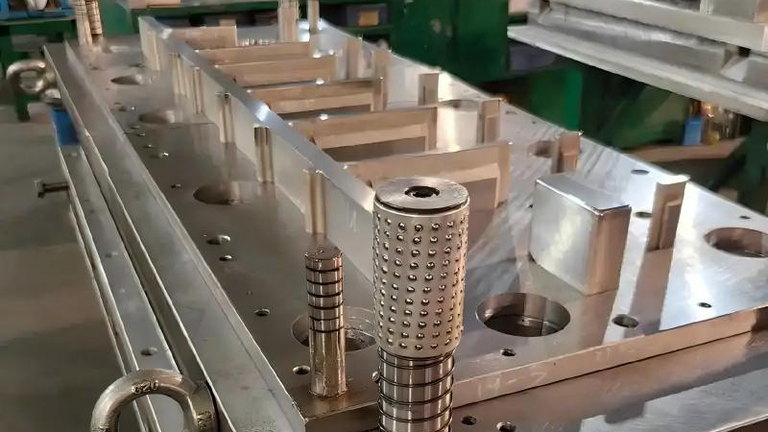
Inputs Required Before Process and Press Selection
Part Geometry
Cut perimeter, holes, narrow webs, corner radii, coined features and the required cut-edge zones.
Material Condition
Grade, thickness, tensile or shear data, hardness, coil condition and permitted material variation.
Production Requirement
Annual volume, target output, downstream operations, inspection plan and acceptable tool-maintenance window.
What Must Be Validated
- Required cutting, blank-holder and counterpressure force margins
- Die clearance, V-ring geometry, punch support and tool material
- Strip layout, feed pitch, lubrication delivery and scrap evacuation
- Cut-face, burr, rollover, flatness and dimensional inspection criteria
- Trial results using the agreed material condition
Continue the Engineering Review
Use the tonnage selection guide for an initial force estimate, then review die clearance and tolerance. Final selection requires the part drawing and material data.
Need a process review before choosing a press?
Send the drawing, material, thickness and annual volume. Our engineers will identify the process questions that must be resolved for an equipment proposal.